|
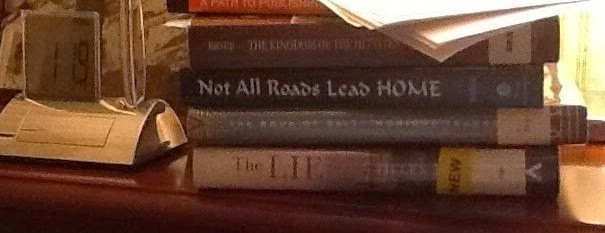
| Window view, NW Washington, DC, (c)2014 Jean P. Purcell |
The Washington Post comes to our house every
day. We know it is likely to be full of sad news front to back.
Our TV brings in many news sources, all telling of
dissension and disaster, threats and fright. They do this 24/7.
News magazines in waiting rooms forecast the
future of nations, climate, governance, militia, families, and more, often with
dark predictions and falling hopes.
Life and death, good and evil happen in
human events. We are reminded of this every day. Some see
or live within it daily.
Christians today around the world realize that much of the world's news resembles in nature the Roman-ruled world of Jesus' years on earth. In earlier years, from Genesis to Malachi, it was much the same: the earth filled
with turmoil, relatively few years of peace anywhere in their experience.
“You took my sin and shame. Forever I will bless Your Holy
Name.” These words run through my mind, from a song I cannot find.
Good News is eternal, intended for all the world to know, all that Jesus taught by
words and deeds.
Those who put their trust in God through His Son have the good news, the gospel, that over-rides and eclipses the distressing news of the
day and the night. This good news brings hope to all nations: God made a way for
all to come to him through his Son, and they shall not perish.
God’s Word goes forth in power in every language. “God
spoke to me in my own language,” said a young man that had lain wounded from a
self-inflicted gunshot, a failed attempt at a revenge-killing against the one
who had killed his father.
Someone took a Bible to the young man in hospital. The Bible was printed in a language different from his own, yet a language
he knew. He read it, and then God spoke to him about his future.
“God spoke to me in my own language,” he said later. It was the language of his family, tribe,
and tradition, not in English, the Bible he had been given.
God told the young man that the effects of his wound
would heal—against the most-assured medical predictions. Sure enough, the young
man walked out on his own two feet from that hospital. He walked out a healed
man with a transformed heart. The desire for revenge left him, replaced by God.
I heard him speak of these things, “live” in his country, along with others
with whom he serves the Lord today in Ethiopia and, as years have passed,
possibly elsewhere, as well.
Isaiah wrote:
“The
Spirit of the Lord God is upon me; because the Lord hath anointed me to preach good tidings unto the meek; he hath sent me
to bind up the brokenhearted, to proclaim liberty to the captives, and the
opening of the prison to them that are bound;
To
proclaim the acceptable year of the Lord, and the day of vengeance of
our God; to
comfort all that mourn;
To
appoint unto them that mourn in Zion, to give unto them beauty for ashes, the
oil of joy for mourning, the garment of praise for the spirit of heaviness;
that they might be called trees of righteousness, the planting of the Lord, that he might be glorified.
And
they shall build the old wastes, they shall raise up the former desolations,
and they shall repair the waste
cities, the desolations of many generations” (Isaiah 61:1-4).
Jesus read those words soon after his 40
days in the desert. This is the record in Luke’s gospel:
“And
he came to Nazareth, where he had been brought up: and, as his custom was, he
went into the synagogue on the sabbath day, and stood up for to read.
And
there was delivered unto him the book of the prophet Esaias. And when he had
opened the book, he found the place* where it was written, (*Esaias/Isaiah 61)
“The
Spirit of the Lord is upon me, because he hath anointed me to preach the gospel
to the poor; he hath sent me to heal the brokenhearted, to preach deliverance
to the captives, and recovering of sight to the blind, to set at liberty them
that are bruised,
To
preach the acceptable year of the Lord.”
And
he closed the book, and he gave it again to the minister, and sat down. And the
eyes of all them that were in the synagogue were fastened on him.
And
he began to say unto them, “This day is this scripture fulfilled in your ears”
(Luke 4:17-21).
Religions vary, “but the Word of the Lord stands forever”
(Isaiah 40:8); 1 Peter 1:25) with power to save. Every soul that
is in darkness, prison, sickness of the mind or body in which it dwells; every
soul that despairs, without hope in this world, God knows perfectly: “…the whole head is sick, and
the whole heart faint” (Isaiah 1: 5).
John the Apostle wrote:
And I beheld, and I
heard the voice of many angels round about the throne
and the beasts and
the elders:
and the number of
them was ten thousand times ten thousand, and thousands of thousands;saying
with a loud voice,
Worthy
is the Lamb that was slain to receive power, and riches, and wisdom, and
strength,and
honour, and glory, and blessing.
And every creature
which is in heaven, and on the earth, and under the earth, and such as are in
the sea, and all that are in them, heard I saying,
Blessing, and honour, and glory, and power, be unto him that sitteth upon the throne, and unto the Lamb for ever and ever
(Revelation 5:11-13).
*****
Scripture source: King James Version (KJV) of the
Bible--public domain