Showing posts with label jean purcell. Show all posts

Tuesday, October 04, 2011

I Changed My Mind: Editing Personal Narrative Books

by Jean Purcell
editor@opinebooks.com.
Jean's new blog, Your Personal Book, for personal narrative writers.
Follow Jean on Twitter @opinaripeople

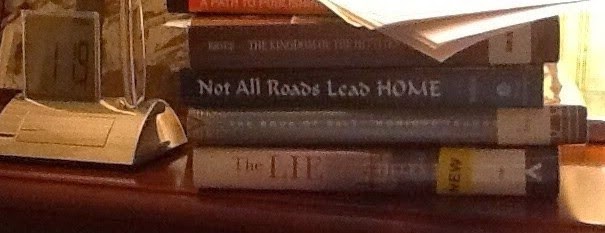
Fuzzy image of my book's clear cover. 
Someone asked me to help their friend's important personal story become a book. My first thought was to say, "No." However, I took it on. 
    My instinct to say "no" was due to my experience writing a personal experience story. These are true events that have deeply affected a person's life, perspectives, often with transformational effects.
    Over a period of 14 years, including five years "off," I finished my personal narrative book, with editing, book analysis, and publishing help from others. I have written all my life and have enjoyed it. I love to organize thoughts and to plan, so that helped, eventually.
   Philip Ralli of Highland Books UK contracted with me for the first publication, and I was thrilled. Philip gave the story the breakthrough introduction the book and author needed. The editor did a great job, too, and said that the manuscript was in good shape. (I credit both the book critique person and editor that helped me before Philip ever saw the book, for giving the shaping-up that helped me enormously in the process.)
     The personal narrative book I recently edited began as a  project for hire. Later, Opine decided to publish it. It is that good. We publish only books we like enormously, and those are the ones that come also at just the right time for us and the authors.
    Personal narrative books must have these basics:
(1) a compelling story interpreted profoundly, as it deserves
(2) a skilled writer/author
(3) a highly cooperative author when editing gets down and dirty;
(4) editing that guards the writer's voice
(5) awareness by author and editor that the emotional roller coaster that some true stories have will not destroy the writer who gives the work its due time, without rushing it or avoiding it.

   Refugee Was My Name is the recently published personal narrative published by Opine Publishing. The author is Mogama (Moses Garswa Matally), an amazing Liberian teacher and pastor now living in Kentucky USA. His book's development had all of the basic elements needed for its success and the author's future sharing of his story, to benefit many readers far beyond the refugee experience, as well as those who have gone through it in Liberia and other places.

Copyright (c)2011 Jean Purcell,Opinari Writers,Opine Publishing
Opine Publishing-Books that Last fills a select niche for Christian books with enjoyable, thought-provoking, and memorable reading. Opine Publishing's niche is books for today and for many tomorrows.


Enhanced by Zemanta

Saturday, September 24, 2011

Woodward and Bernstein Editing Skills for Watergate

The writers that do not need editors keep journals and private writings for themselves or to share in letters, e-mails, or blogs.

Writers that need editors are columnists, article writers, book authors and any other writer, such as in-house writing for organizations or business...anyone whose work is for publication.

Reporters have editors, of course, and we take for granted that this includes the best, prize-winning reporters. Two reporters untangled the Watergate story that kept the political world in Washington, DC, glued to their features in The Washington Post. Every day. For months. 

Robert Woodward and Carl Bernstein became more famous when their book about Watergate, All the President's Men, came out of film production starring Robert Redford and Dustin Hoffman.  

Remember who was Bob Woodward's most consistent and frequent editor?

Writers know words and thoughts and how they should fit together for specific genres to create reliable and interesting reading. Editors know these things too, perhaps in more detail, and definitely with the unique advantage of objectivity. Editors, therefore, bring what works to help bring readers to the easy chair, sofa, table or computer, Kindle or Nook, with attention glued to a writer's words and pages, whether nonfiction or fiction.  

Editing goes beyond grammar, spelling, and structure of language...sentences and paragraphs. Part of good editing is the ability to analyze writing projects, especially books, for direction and flow from beginning to end. 

No matter what genre a book fits into, readers expect some enjoyment or satisfaction from the process, even from the most serious book topics. There must be redeeming aspects within a work. In fiction, this can come through minor characters. However it comes, it is essential. These and other ingredients an editor looks for, with an objective eye. The good writer has more inside him or her, usually, than a manuscript displays before editing. Editors seek to help uncover that yet-to-be-expressed skill or insight that the writer can yet reveal.  

All of us love to finish a book feeling satisfied, even if shocked by how the story ended or how it was resolved. We want to feel that the writer did not set us up, but gave an adventure of imagination, people (real or fictional), and story. 

Remember who edited much of Bob Woodward's writing at The Washington Post when he and Carl Bernstein were hounding the Watergate story? Remember how Bernstein started their relationship, in fact, by taking an article out of a pile and editing it...at his typewriter, of course?

This brief overview of how editors can help writers improve might encourage a writer out there to welcome an editor, rather than dread "what might happen to" the work. What could happen could be even much better than the writer realizes...and that will come to the surface through a good writer-editor relationship. The editing process can enrich the skills and lives of both. 


Copyright (c)2011 Opinari Writers Network
Enhanced by Zemanta

Tuesday, February 01, 2011

South façade of the White House, the executive...Image via Wikipedia
by Jean Purcell

If you have never visited Washington, D.C., you are missing out on a fabulous experience. Plan a trip there and allow our country to come alive before your very eyes. You won't be sorry.- Pat Brannon, author, commenting on this blog's July 4 post, 2010.

And this is the time to make and set up plans to visit Washington in the Spring of 2011. Plan a trip for the Cherry Blossom Festival, 2011! March 26-April 10. and take notes for a few articles or your blog or web site. If you write about history or governance, what better place than the US capital city?

I think that visitors like Pat, quoted above, see the city with fresher, more appreciative eyes than those of us who live nearby. However, we do not want to take for granted this beautifully designed city. It is a city of marble, of ancient Gothic and Roman architecture, of engravings from treasured documents and speeches, and of giants of this country whose service, life-stories, faith, and words dominate the history that permeates so much of the capital city. Who has documented the numbers of the many books and movies based on this city of history, dreams, and power, intended for good? This is inspiring territory for writers like Pat Brannon, who writes poetry and stories, for grownups and children, respectively. 


Walk Softly, You're Steppin' On My HeartFilthy Farley O'Charlie McBarley   Pat Brannon is a writer working within schools to help children confront difficult problems,  such as bullying, through drama and humor that talks straight.

Enhanced by Zemanta

Wednesday, July 07, 2010

Are You Crazy to PAY for Your Book's Marketing?

free internetImage by striatic via Flickr
It's easy to go into debt paying for book marketing programs that don't work. Want some ideas to avoid this? Examples and ideas follow: 

Moving from paying for promotions to making opportunities means you need to use skills you already have. You have to assert yourself on the page; so, assert yourself with attention-getting marketing. Writers can find free professional advice via websites, blogs, and newsletters online. The Internet is as good a research tool as you will find almost anywhere. And what about doing research in public and university libraries?

Before my company, Opine Publishing, released the rare Charles H. Spurgeon book, The Mourner's Comforter, in 2007, we sent 40-plus free Advance Review copies, six weeks in advance, to a carefully prepared list of individuals and organizations. The book did well. 

Three years later, a reviewer finally read his free copy, and got his review into a widely distributed magazine. Who knows if the book's second climb among Spurgeon books on Amazon.com came from the 2010 review? I think so, for we did see a spike in orders.

You have a passion for your writing. You want to connect with readers. You're willing to grow as a writer. You want to know all of the important parts of writing and publishing as well as anyone else at your stage of experience! 

Marketing is: "Reliable and persuasive communication about something of value."* That's it: Communicate! If you pay for marketing, are you sure you've carefully evaluated what that expense might get for you? You're only "book marketing crazy"  if you don't think with a hard hat on, for this service.

Jean Purcell (c)2010
Enhanced by Zemanta

Tuesday, July 06, 2010

Personal narrative author, Jane Bullard, about pen name decision

by Jean Purcell, aka Jane Bullard

Not All Roads Lead Home, 2nd Edition: The Story of Renewed Love
Opine, USA, 2004 edition
It is important to think carefully before assigning a pen name, because it needs to be a name you can feel comfortable with for a long time. It needs to be more than a creative whim. Not All Roads Lead Home is a love story, a personal narrative, that Highland Books UK published under my pen name, Jane Bullard.

The first name, Jane, is an anagram of a given name, Jean. Some people, when introduced to me, call me Jane, and I am comfortable being addressed by either name. 

The last name for the pen name, Bullard, is a family name of my maternal grandmother and one of which I am proud. She was widowed when my mother was very young (the last of five), during the early 20th century, when most women did not work outside the home. My grandmother did tailoring and was a salesperson in a local haberdashery. 

After the pen name for the Not All Roads Lead Home manuscript came into being, I noticed an unexpected change in my writing perspective. I was more willing to edit out sections or chapters that I liked, but that did not serve the story, centrally. I felt the story more important, for example, than side-line interests I had in those years.   

Highland Books UK, took on the book for publication, when many publishers were discouraging authors of personal narratives. Later, after I formed a publishing company to enable U. S. distribution of my book, I ended up bring the story up to date 16 years later. That became the second edition. I decided to keep the pen name, for continuity. A coming of age, fictional story I've been working on will have my real name.   
Not All Roads Lead Home
Highland Books, UK, 1996 edition
Enhanced by Zemanta

Wednesday, June 30, 2010

Blog Monetization for the Galactic Traveler

Okay, "Galactic Traveler," in this case, refers to the Global (Internet) Traveler. GITs cover the world, because "going global" is possible via computers, satellites, Internet. Writers that do not have a web page, site, or blog need those--fast.

Opinari Quarterly-Network for Writers-learned that Google blogs and Amazon Associates have teamed up. So OQ-NW signed on. OQ has opted to include more books and other materials interesting to readers and writers, like electronics, including Kindle.
Let us know what you think.

Thursday, June 24, 2010

Publishing Know-how

Keep investigating how publishers think. Learn by experience, questioning, and reading. Learn from other, published writers. Read-scan Publisher's Weekly at library. Ask them to order if they do not have it. Maybe they will. Good writing has to find its place--its niche and home. Learn the ins and outs of publishers' ways of looking at what you do. Writers may see their works according to genre, lit, or art. Publishers see them as products they invest in. Our work has got to carry the weight, professionally, of marketplace interests or demands. ~ Opinari Quarterly (OQ)